
Fruit & vegetables lead AgriExchange listings with 1,873 lots
AgriExchange lists 1,873 fruit & vegetables lots, including 71 with seller asking prices. The snapshot shows listed availability, but does not establish harvest timing or fresh produce export flows.
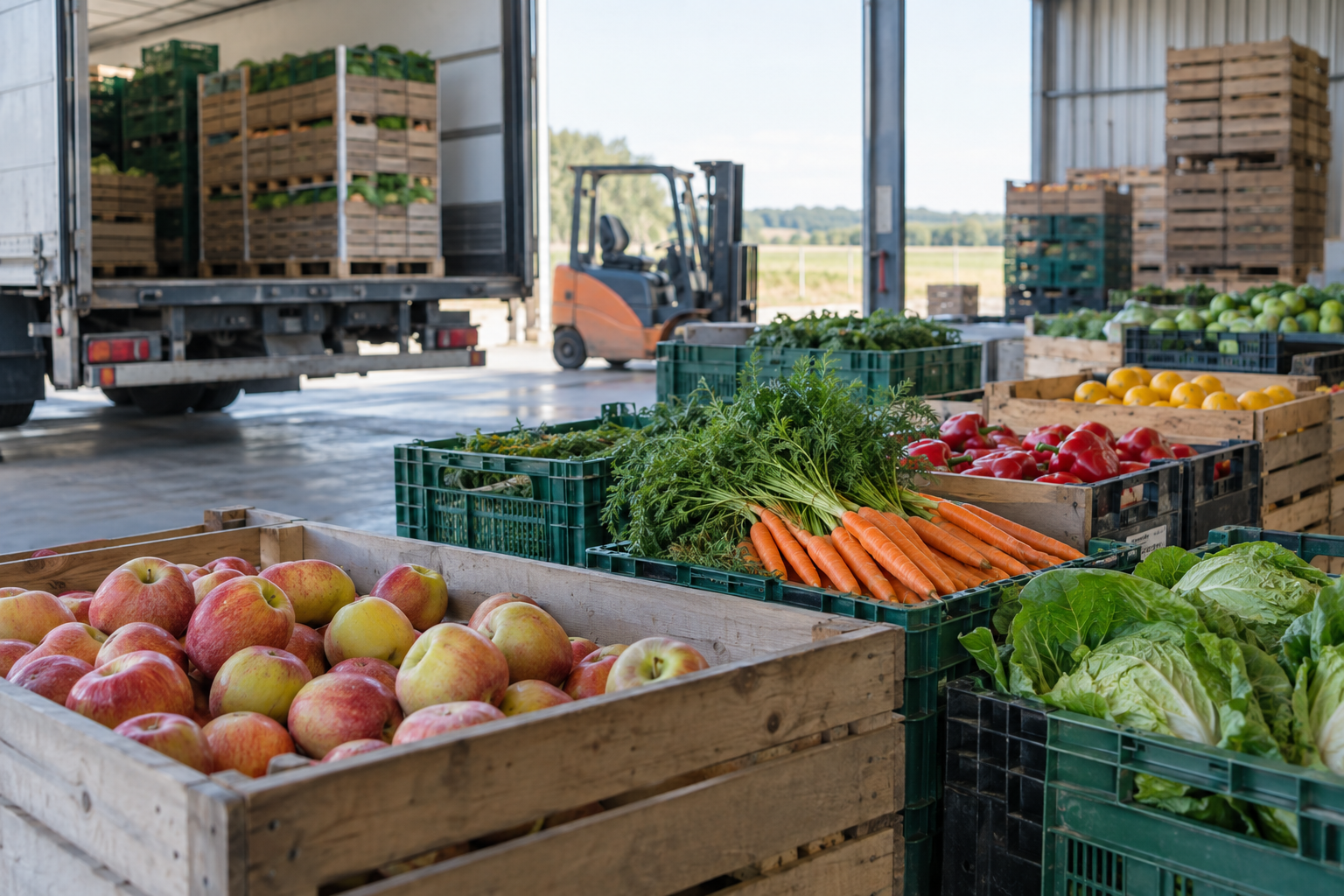
Fruit & vegetables lead listed supply
Fruit & vegetables are the largest sector by listed lots in AgriExchange’s snapshot dated 24 October 2026. The platform records 1,873 lots in the sector, against 3,352 listed lots across the exchange. This establishes the sector’s prominence within the marketplace, but not its share of agricultural supply outside the platform.
For a report focused on fresh produce, the distinction between the sector label and the underlying product specifications matters. The supplied aggregate does not separate fresh goods from other product forms or identify individual fruit and vegetable categories. It therefore supports a description of listed fruit & vegetables supply, rather than a verified inventory of fresh produce ready for dispatch.
The snapshot also contains no previous-period comparison. The listing count cannot establish whether availability has expanded or contracted, whether particular harvests are entering the market, or whether lots have remained listed across several reporting periods.
Asking prices describe listed offers
According to AgriExchange’s platform data, 71 fruit & vegetables lots carry a seller asking price. The sector’s asking-price range is USD 250 per metric ton to USD 6,990 per metric ton, with a median of USD 1,500 per metric ton. Across the exchange, 94 lots carry a seller asking price.
These figures describe seller asking prices for listed lots, not transaction prices. The median is a summary of the priced fruit & vegetables listings; it is not a price benchmark for every product in the sector. The supplied data does not identify which products, origins, grades or delivery terms sit at either end of the range.
Consequently, the range cannot be interpreted as a premium or discount between otherwise equivalent lots. Nor does the snapshot support a claim that fresh produce prices are rising, falling or stable. There is no historical asking-price series or like-for-like product comparison in the supplied inputs.
For a more specific comparison, the missing fields include product identity, product form, grade, packaging, available quantity and the basis of delivery. Without those details, the published range remains a sector-level description rather than a comparable delivered-cost measure.
Origin records are not export flows
AgriExchange’s most common origin records are reported for the whole exchange, not separately for fruit & vegetables. Sri Lanka accounts for 2043 listed lots, South Africa for 422 and Brazil for 211. Those counts cannot be assigned to fresh produce using the supplied data.
The origin field also contains differently written location labels: “LIMA, Peru” has 116 listed lots, “Lima, Peru” has 91 and “lima, Peru” has 54. These are presented as separate records in the platform summary. Their appearance highlights a limitation in comparing locations without first establishing a consistent geographical classification.
An origin attached to a listing does not establish an export movement. The supplied platform information contains no destination breakdown, shipment dates, customs records or consignment weights. It cannot show which routes are active, how much produce has crossed a border, or whether an origin is gaining export share.
The defensible conclusion is narrower: the exchange contains listings associated with several origins, while the geographical composition of fruit & vegetables supply remains unavailable in this extract.
Seasonality remains unverified
The report date provides a reference point for the platform snapshot, not evidence of a harvest window. No crop calendars, harvest dates, production estimates or product-level availability schedules are supplied. An October listing cannot, on that basis alone, be described as new-season produce or evidence of a seasonal supply peak.
Likewise, the inputs do not establish weather-related losses, harvest delays, changes in quality or cold-chain interruptions affecting the listed lots. None of those developments should be inferred from the asking-price range or the distribution of origin labels.
A seasonal assessment would need to connect an identified product and growing location with harvest timing and current dispatch availability. Those connections are absent here, so the report does not assign seasonal conditions to particular countries or commodities.
Wider trade context
UN News reported on 9 October 2026 that global trade reached a record $35 trillion despite conflicts. That headline provides broad trade context, but it does not isolate agricultural trade, fresh produce shipments or any of the origins represented on AgriExchange.
It therefore cannot establish stronger fruit & vegetables export demand or explain the platform’s listing count. The global trade headline and the marketplace snapshot describe different measures and should remain separate in interpreting this report.
What this means for buyers and sellers
The snapshot identifies fruit & vegetables as AgriExchange’s largest listed sector and provides an asking-price summary for its priced lots. Buyers assessing availability would need lot-level confirmation of product specifications, harvest timing, dispatch status and delivery terms. Sellers’ listing information would need the same detail to support meaningful comparisons.
Neither the listing count nor the median asking price resolves questions about seasonal supply, shipment execution or export destinations. Those remain matters for additional documentation rather than conclusions supported by this aggregate snapshot.
Sources
AgriExchange platform data, generated 2026-10-24T19:25:47.826Z: exchange and sector listing counts, seller asking-price coverage, fruit & vegetables asking-price range and median, and exchange-wide origin records.
UN News, news.un.org, 9 October 2026: “Global trade reaches record $35 trillion despite conflicts.” Only the supplied headline was used.