
Beans listings carry asking prices from USD 200 to USD 2,500 per metric ton
AgriExchange lists 93 beans lots, with seller asking prices on 6. The median is USD 600 per metric ton, but the aggregate does not establish separate benchmarks for individual bean types or chickpeas.
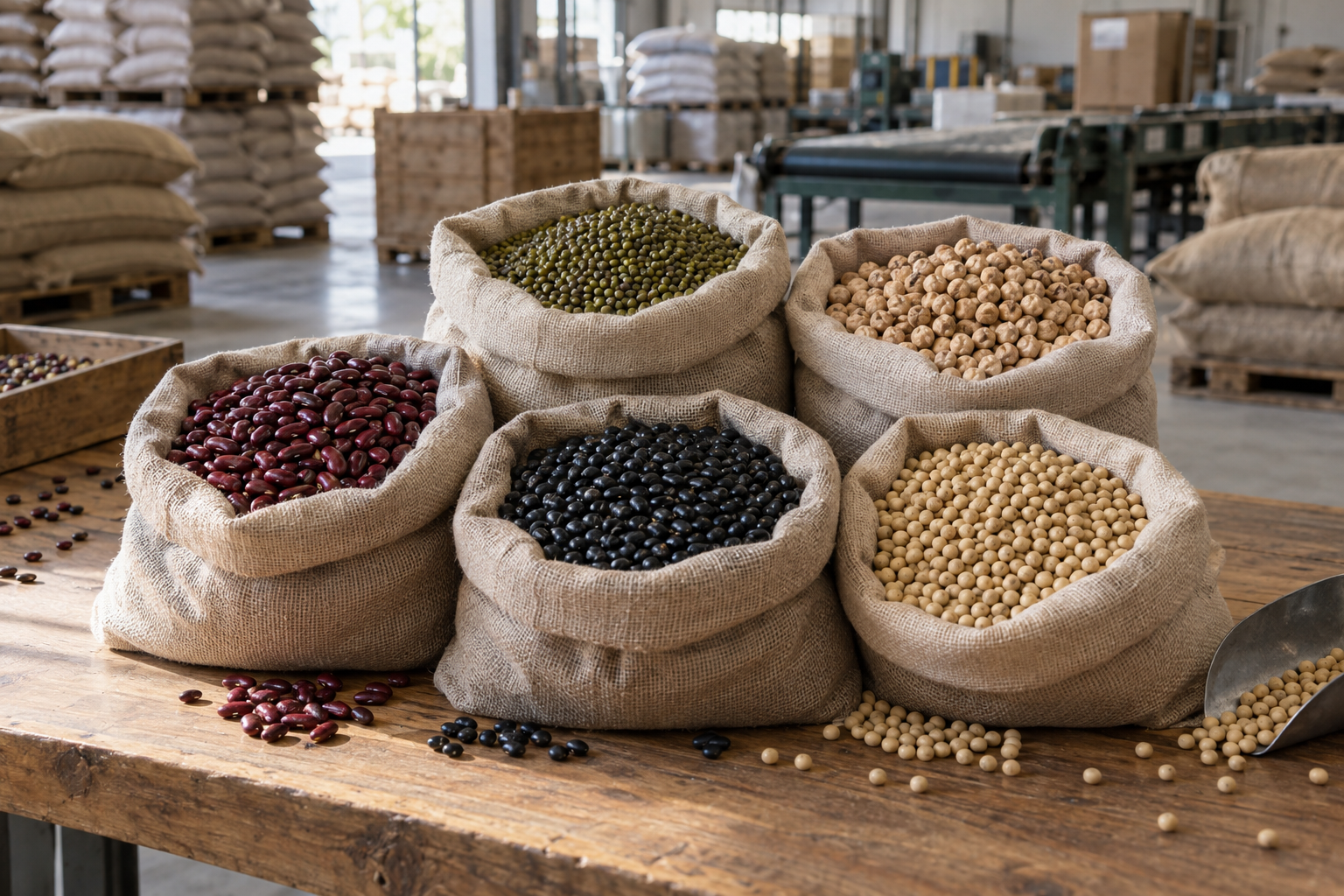
Beans asking-price snapshot
AgriExchange’s snapshot dated 24 October 2026 records 93 listed beans lots, of which 6 carry a seller asking price. The reported asking-price range is USD 200 per metric ton to USD 2,500 per metric ton, with a median of USD 600 per metric ton. These figures describe listed offers in the platform’s beans sector, not completed transaction prices or a benchmark for the wider beans market.
The report covers kidney beans, black beans, soybeans, mung beans and chickpeas. However, the supplied platform extract does not divide the beans figures among these products. It therefore supports a sector-level view of asking prices, rather than separate assessments of availability or pricing for each product. None of the range endpoints or the median can be assigned to a particular bean type from this extract.
What the platform figures establish
Across AgriExchange, the supplied database snapshot records 3,352 listed lots, with 94 carrying a seller asking price. Within that platform-wide context, the beans sector has a clearly identified listing count and a smaller priced subset. Listing counts describe the number of listed lots; they do not establish the physical quantity of commodity available because lot weights are not supplied.
The beans median summarises the priced subset only. It should not be treated as the asking price for the unpriced listings, nor as an average quotation for kidney beans, black beans, soybeans, mung beans or chickpeas individually. The extract also does not provide the individual asking prices behind the summary, so the distribution within the reported range cannot be examined.
There is no comparable earlier snapshot in the supplied material. Consequently, the figures do not establish whether asking prices or listing counts have risen, fallen or remained unchanged. This is a dated view of platform offers, not evidence of a market trend. The spread between the lowest and highest asks is visible, but its causes are not documented.
Product-level interpretation
For kidney beans and black beans, the extract provides neither separate lot counts nor separate asking-price ranges. It cannot establish which product has more listings, whether either accounts for the lowest or highest ask, or whether their specifications are comparable. A meaningful product-level comparison would require the relevant lot descriptions and associated quotations rather than the beans-sector summary alone.
Soybeans are likewise not identified separately in the supplied figures. There is no soybean-specific quantity, origin, specification or price series. The beans median therefore cannot serve as a soybean quotation, and the snapshot provides no basis for assessing soybean availability relative to the other products covered here.
For mung beans and chickpeas, the same distinction applies: their inclusion in the report’s scope does not demonstrate that either is represented among the priced lots. The extract supplies no product breakdown that would resolve that question. Product form, grade, packing and supporting documentation are also unavailable, leaving no basis for explaining the sector’s asking-price spread through differences in those attributes.
Origins and delivery terms
The platform data includes an exchange-wide list of common origins, but it does not connect those origins to the beans lots. That list cannot establish where the kidney beans, black beans, soybeans, mung beans or chickpeas covered by this report were produced or dispatched. Applying platform-wide origin patterns to this sector would go beyond the available evidence.
Delivery terms, dispatch locations, shipment windows and freight inclusions are not supplied with the beans price summary. The reported asks consequently cannot be presented as comparable delivered costs. Without the underlying quotations, it is also not possible to determine whether differences in commercial terms account for any part of the range. The summary identifies quoted price levels without establishing a common delivery basis.
Wider trade context
UN News reported on 9 October 2026 that global trade reached a record $35 trillion despite conflicts. That headline provides broad trade context, but it does not identify beans or chickpeas as contributors to the total. It supplies no product-level export quantities, destination breakdowns or price information relevant to the platform listings.
The global headline and the AgriExchange snapshot therefore answer different questions. UN News describes aggregate trade, while the platform data describes listed lots and seller asking prices. Neither source establishes a connection between the global trade record and the beans asking-price range. No such causal conclusion is drawn here.
What this means for buyers and sellers
For buyers, the snapshot provides a reference for the asking prices visible in the beans category, not a product-specific procurement benchmark. For sellers, it describes the same limited set of listed asks, rather than evidence of achievable transaction prices. Product identity, lot weight, specification, origin and delivery basis remain necessary context for interpreting an individual quotation.
The central finding is limited but concrete: AgriExchange reports 93 beans lots, with 6 priced, and a median seller asking price of USD 600 per metric ton. Separate conclusions for kidney beans, black beans, soybeans, mung beans and chickpeas require information beyond the supplied aggregate.
Sources
AgriExchange platform database snapshot, generated 2026-10-24T19:25:47.826Z: exchange-wide listing and priced-lot counts; beans listing count, priced-lot count, asking-price range and median; scope of the supplied origin data.
UN News, news.un.org, 9 October 2026: “Global trade reaches record $35 trillion despite conflicts.” Used only for the attributed global trade context.