
Almonds in South America: Production, Trade and Quality
Chile and Argentina anchor South American almond production, while Brazil provides an important consumer market. Product form, food safety and storage conditions shape regional trade.
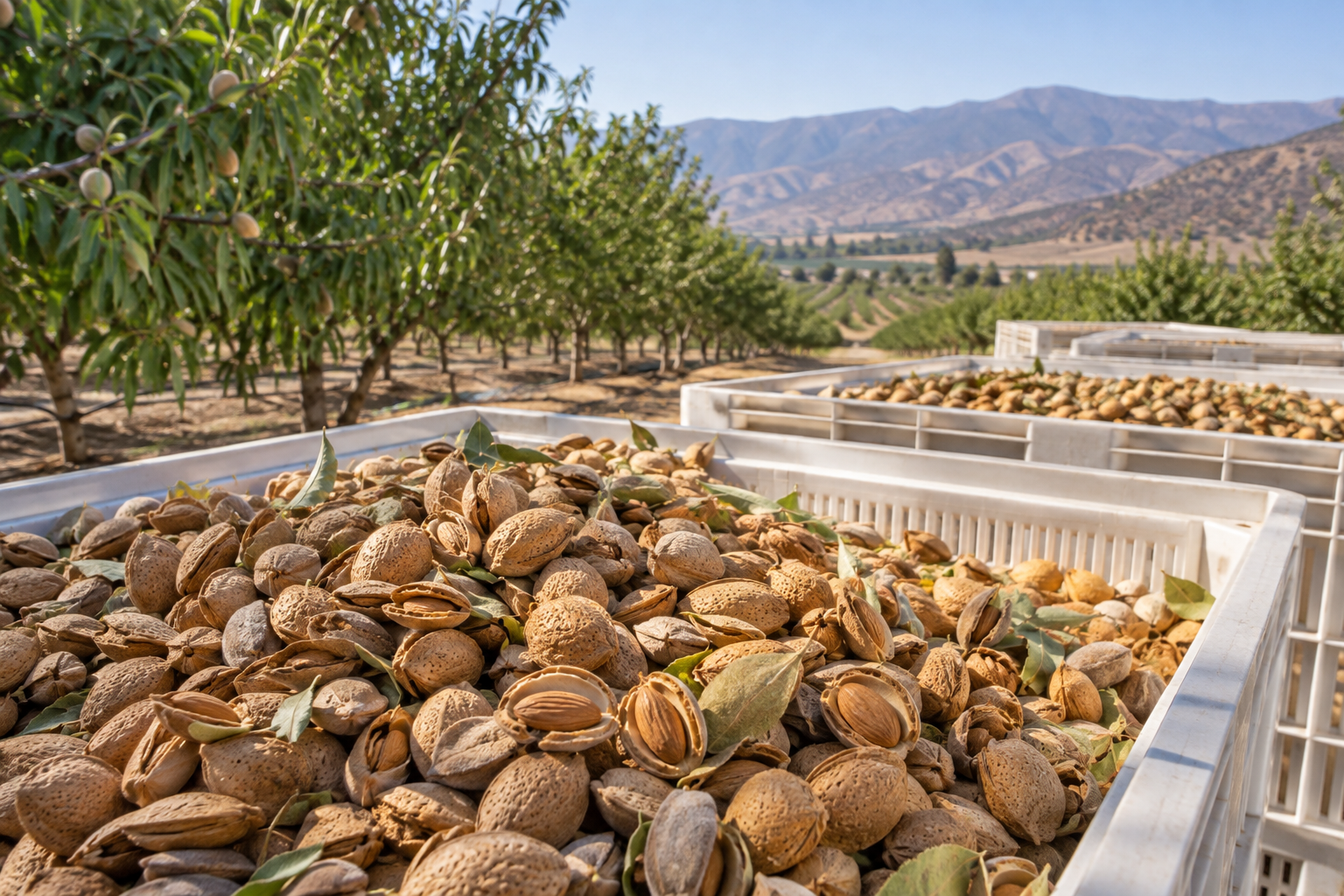
Regional market overview
South America combines established almond-growing areas with substantial markets for imported nuts and processed ingredients. Chile is an important regional production and export base, supported by the Mediterranean climate of its central growing areas. Argentina also produces almonds, particularly in irrigated western districts. Brazil is an important destination for almonds used in retail packs, confectionery, bakery products and foodservice.
The regional market is not uniform. Orchard suitability is concentrated in areas with appropriate winter chilling, relatively dry summers and reliable water access. Consumption extends well beyond those areas, creating demand for imported kernels and locally packed or processed products. Commercial comparisons therefore need to distinguish growing origin, processing location and final destination.
AgriExchange’s supplied all-region snapshot lists 2 Almonds lots, with 0 carrying an asking price. Neither listed origin is in South America. This is insufficient to establish a regional asking-price benchmark or assess regional availability. Platform listings are not a measure of completed sales or total market supply. This profile consequently describes market structure rather than current trading conditions.
Production and supply
Chile’s central agricultural belt offers suitable conditions for commercial almond orchards. Irrigation, orchard management and access to cleaning, shelling and packing facilities are important to supplying consistent export-quality kernels. Growers must manage flowering conditions, pollination, water availability and harvest timing, all of which influence marketable quality and orchard performance.
Argentina’s almond production is associated with western irrigated growing areas, including Mendoza and San Juan. Supply can serve domestic food manufacturers, wholesalers and specialist nut businesses, with commercial suitability depending on kernel characteristics and processing capability. Production in these areas should not be treated as evidence of readily available export lots: export readiness also requires documentation, suitable packaging and destination-specific compliance.
The supply chain extends beyond orchard output. Shellers, graders, ingredient processors and packers convert harvested almonds into products suited to different buyers. Whole natural kernels, blanched kernels, slices, slivers, pieces and almond flour serve distinct uses. A country can therefore participate meaningfully in the almond market through importing and processing even where local cultivation is limited.
No crop estimate, stock assessment or harvest outcome is available in the supplied material. Structural growing conditions do not establish the size or condition of the current crop.
Demand and trade flows
Retail demand includes natural and roasted almonds sold through supermarkets, specialist shops and online channels. Industrial demand comes from chocolate and confectionery manufacturers, bakeries, cereal and snack producers, and businesses making almond-based beverages or pastes. Foodservice buyers use almonds as ingredients and garnishes, often requiring a particular cut or a consistent appearance.
Brazil’s consumer and food-manufacturing markets make imports important to regional demand. Argentina and Chile combine domestic consumption with local production, while other South American destinations also receive imported almonds through wholesalers and ingredient distributors. Local production does not eliminate imports: processors may need particular specifications, delivery schedules or forms that domestic suppliers do not consistently provide.
Regional supply competes with almonds from established producing countries outside South America, notably the United States. Trade can involve direct imports by large processors or distribution through specialist importers and repackers. Geography alone does not determine competitiveness. Freight, customs treatment, kernel quality, processing requirements and delivery terms all affect the usefulness of an offer.
Commercial comparisons should separate in-shell almonds from shelled kernels and further-processed ingredients. These products differ in usable yield, processing needs and packaging costs. An apparent price difference between forms is not necessarily a difference in underlying value.
Quality, grades and compliance
Almond specifications commonly address variety, kernel size, whole-kernel content, broken material, foreign matter, moisture, insect damage and other defects. Appearance matters particularly for retail packs and decorative uses. Manufacturers using pieces or flour may place greater emphasis on flavour, processing behaviour and particle consistency, without relaxing food-safety requirements.
Natural and blanched kernels are not interchangeable in every application. Blanching removes the skin and changes appearance and some functional characteristics. Roasting introduces further requirements concerning flavour, colour and processing consistency. Descriptions such as premium or selected are insufficient on their own; measurable specifications and representative samples provide a clearer basis for evaluating a lot.
Food-safety controls require attention to microbiological hazards, including Salmonella, as well as pesticide residues, mycotoxins where relevant and contamination during processing. A treatment claim should identify the process and supporting documentation rather than imply that all almond products receive the same treatment. Traceability should connect the delivered product with its origin, processing history and lot identification.
Import requirements differ by destination and product form. Plant-health certification may apply to relevant shipments, while food registration, labelling, allergen declarations and contaminant limits require separate checks. In-shell, raw shelled, roasted and otherwise processed almonds should not automatically be assumed to face identical requirements. Organic claims also require certification acceptable in the destination market.
Seasonality and logistics
South American almond harvesting generally falls in late summer and early autumn, with timing varying by location, variety and growing conditions. This Southern Hemisphere schedule differs from Northern Hemisphere harvesting and can provide another sourcing window. It does not establish immediate export availability, because drying, shelling, grading, testing and packing take additional time.
Almonds are storable, but their oil content makes protection against heat, oxygen and prolonged unsuitable storage important. Moisture exposure can contribute to quality deterioration, while poor handling can increase breakage. Clean, dry storage and packaging with appropriate moisture and oxygen protection help preserve product condition. Strong-smelling cargoes also warrant attention because nuts can absorb odours.
Domestic road transport links producing and processing areas with consumption centres and export gateways. International movements may use sea freight or cross-border road services, depending on origin and destination. For either route, transit conditions, condensation risk, container cleanliness and packaging integrity matter alongside the quoted freight cost.
Shelf-life assessments need to consider processing date, packaging format and storage history, not simply arrival date. Seasonal heat and humidity at the destination can make warehousing conditions as important as the main transport leg.
What this means for buyers and sellers
A useful commercial enquiry identifies the intended application, product form, size or cut, acceptable defects, treatment requirements and packaging. Destination, delivery basis and required documentation are equally important. These details make offers more comparable and reduce the risk of matching a visually attractive kernel to an unsuitable industrial application.
For suppliers, clear lot descriptions and supporting quality records help distinguish orchard origin from processing location and clarify what is available for shipment. For buyers, samples and specification checks provide information that a broad product label cannot. Both parties benefit from explicit agreement on inspection, condition on arrival and handling responsibilities.
The supplied platform snapshot cannot support a South American price assessment. Any future comparison should use verified seller asking prices expressed in USD per metric ton, aligned for product form, quality and delivery basis. Asking prices must remain distinct from completed transaction prices. Regional production capability and consumer demand provide context, but neither establishes current stock availability or negotiated terms.
Sources
AgriExchange: supplied all-region Almonds listing snapshot, used only for listing coverage and asking-price availability. No South American origin appears in that snapshot.
The supplied source headlines contain no directly relevant almond-market reporting and were not used. Production, product-form, trade and handling descriptions are qualitative structural market context, not independently verified current-season findings.