
Almonds in Asia: Regional Supply, Demand and Trade Profile
Asia combines almond-growing areas with substantial import and processing markets. Product specifications, food safety and shipment timing shape trade, while platform pricing data remain unavailable.
Regional market overview
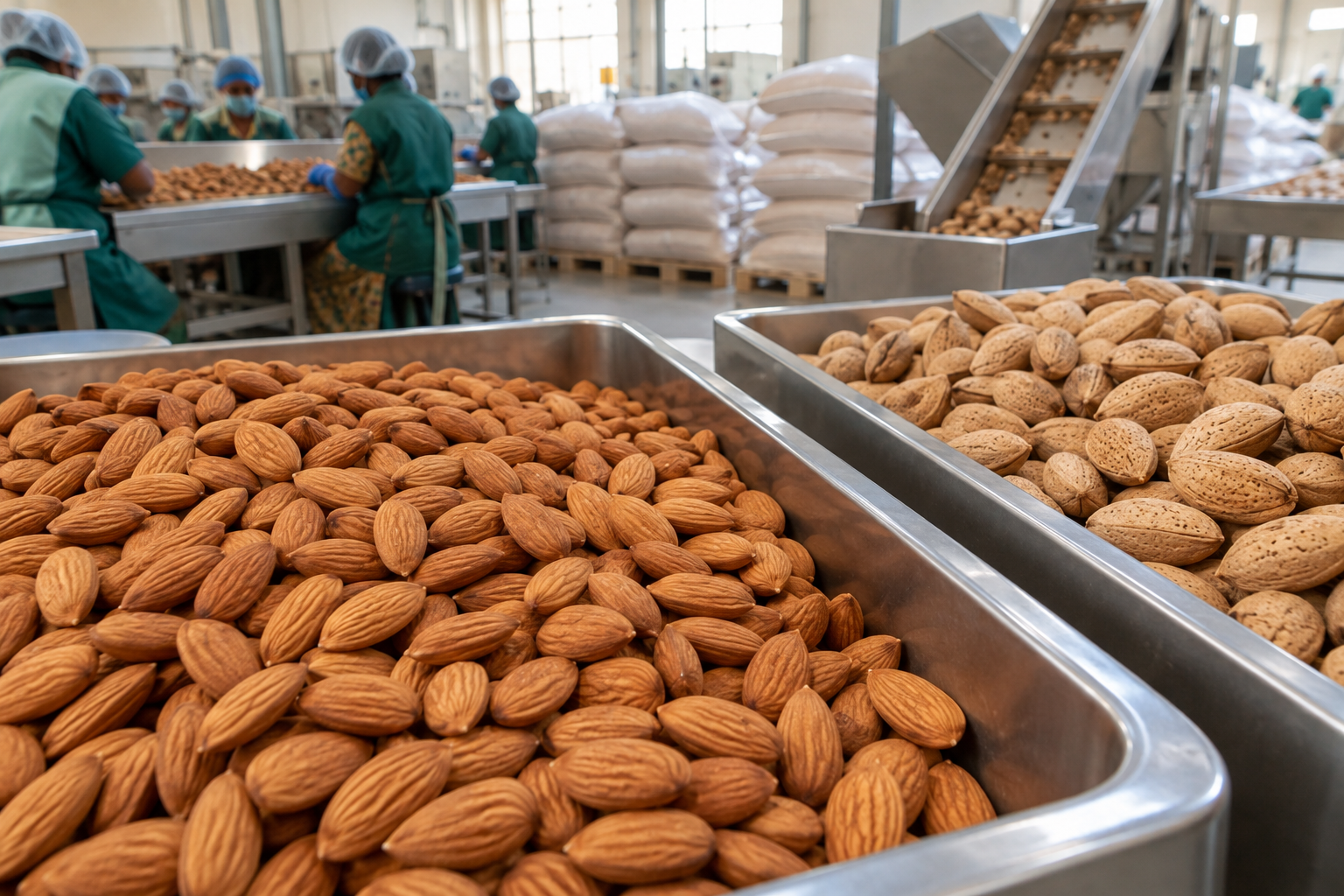
Asia is a meaningful almond market spanning orchard production, import distribution, food manufacturing and retail consumption. Its commercial structure differs across subregions. India has an established market for whole almonds, including in-shell products, while China combines domestic growing areas with imported supply. Japan and South Korea are import-oriented markets serving snack, confectionery and bakery manufacturers. West Asian markets combine local production traditions with consumption through retail, hospitality and food processing.
These markets should not be treated as a single specification or purchasing channel. Whole-kernel appearance matters to premium retail and gifting customers, whereas industrial users may prioritise consistency in flavour, particle size and processing performance. Local food traditions, packaging preferences and import requirements create further differences between destinations.
AgriExchange records Listed Almonds lots: 2 (0 with an asking price), across all regions. The platform lists Sri Lanka 1 among its origins. That listing is not evidence of commercial almond cultivation in Sri Lanka, nor does it establish the underlying country of production. Asking-price information is unavailable, so the supplied data support neither a regional price benchmark nor a comparison between Asian destinations. Any platform asking prices, if available, would represent seller offers rather than completed sales.
Production and supply
Almond cultivation in Asia is associated with suitable temperate and relatively dry growing environments rather than tropical plantation systems. Iran, Afghanistan, Türkiye, parts of Central Asia and parts of China have almond-growing areas. India also has production in suitable northern environments. Orchard conditions, varieties, irrigation access and post-harvest infrastructure vary substantially across these locations.
Regional production serves local markets and trade channels, but imported almonds are important to Asian commercial supply. Established international routes bring Californian and Australian almonds into Asian importing and processing markets. Their opposite hemisphere harvest calendars can provide different procurement windows, although actual availability depends on crop conditions, inventory and shipment schedules.
Supply takes several forms: in-shell almonds, natural kernels, blanched kernels, sliced or slivered almonds, pieces, flour and paste. Origin alone does not establish suitability. Shell characteristics, kernel size, processing method and lot consistency determine whether a shipment fits retail packing, roasting or ingredient manufacture. Traders may also dispatch goods from a country other than the growing origin, making the distinction between cultivation, processing and shipment location commercially important.
Demand and trade flows
India's almond trade includes in-shell imports for local shelling, sorting and distribution, alongside kernel imports for retail and manufacturing. Whole almonds feature in household consumption, festive gifting, sweets and foodservice. These channels can attach different values to appearance, kernel recovery and pack presentation, so comparing offers requires more than a common product name.
China's market encompasses snack processing, retail packs, bakery ingredients and confectionery. Japan and South Korea provide markets for roasted snacks and manufactured foods, where consistent specifications and supplier documentation are important. Across Southeast Asia, almonds enter urban retail, bakery, confectionery and hospitality channels, with product format and pack size adapted to the intended customer.
West Asian consumption includes confectionery, pastries, hospitality and gifting. Gulf distribution networks also connect overseas suppliers with destination markets through import and re-export businesses. A shipment routed through a regional hub therefore needs documentation that clearly separates growing origin from the location of dispatch.
Processing may occur close to consumption markets, particularly where businesses roast, season or repack imported kernels. Alternatively, manufacturers may import prepared ingredients directly. The choice changes freight handling, shelf-life requirements and the degree of quality verification needed before dispatch. This profile does not establish current import growth, shipment volumes or demand changes.
Quality, grades and compliance
A usable almond specification identifies the product form, variety where relevant, size description, permitted defects and processing status. For in-shell almonds, shell integrity, shell hardness and expected kernel recovery are important. Kernel contracts commonly address broken pieces, doubles, discolouration, shrivelling, insect damage and foreign material. Industrial buyers may accept appearances unsuitable for premium retail, provided the material meets agreed functional and safety requirements.
Natural and blanched almonds are not interchangeable in every application. Skin removal changes appearance and processing behaviour, while roasting changes flavour and moisture characteristics. Sliced almonds need consistent dimensions for bakery use; flour and meal require defined particle characteristics and clear ingredient declarations. Sample approval should relate to the shipment specification rather than serve as a substitute for it.
Food-safety controls address microbiological hazards, aflatoxins, pesticide residues and contamination during handling. Low moisture does not eliminate microbiological risk. Where a treatment is required, its suitability and supporting records matter alongside laboratory results. Almonds also require appropriate allergen controls through processing and packing.
Import conditions differ by destination and product form. Phytosanitary documentation, plant-health controls, food registrations, labelling and residue requirements should be checked against the applicable jurisdiction. A requirement applying to in-shell nuts may differ from that for processed ingredients. No supplied source establishes a new almond-specific regulatory change for this report.
Seasonality and logistics
Northern hemisphere almond harvesting generally falls in late summer and autumn, while Australian harvesting occurs during the southern hemisphere harvest season. New-crop availability follows harvesting, hulling, drying, shelling where applicable, grading and shipment preparation. Harvest completion therefore does not automatically mean that export-ready material is immediately available.
Crop year matters because storage history influences flavour, oxidation and remaining shelf life. Almonds contain oils that can deteriorate with prolonged exposure to heat, oxygen and unsuitable storage conditions. Cool, dry storage, protective packaging and stock rotation help preserve quality. Warehouses and containers also need protection against pests, moisture and odour contamination.
Sea freight connects overseas origins with Asian ports, followed by inland transport to processors and distribution centres. Tropical and humid destinations place particular emphasis on moisture protection and careful handling during unloading and warehousing. Condensation and damaged packaging can compromise otherwise acceptable goods.
Festivals and gifting periods can influence purchasing calendars, but their relevance varies by destination. Shipment planning consequently needs to account for manufacturing schedules, customs clearance and local distribution rather than relying solely on orchard seasonality. The supplied material does not establish current freight rates, port delays or route disruptions.
What this means for buyers and sellers
The central commercial issue is specification alignment. An in-shell shipment intended for shelling cannot be assessed on the same basis as retail-ready kernels or almond flour. Comparable quotations need a common product form, quality description, crop-year declaration, packing basis and delivery terms. Without these details, apparent differences between offers can reflect different products or cost responsibilities.
Traceability is equally important. The Sri Lanka platform listing should be treated as a listed origin requiring clarification, not as confirmation of where the almonds were grown. Growing country, processing location and dispatch point should be distinguished in commercial and compliance documents.
The available platform sample is too limited and lacks asking prices, so it cannot establish regional availability, transaction values or prevailing market direction. For both sides of a transaction, clear specifications, representative samples, verifiable documentation and realistic handling arrangements provide a stronger basis for assessment than unsupported regional price claims.
Sources
- AgriExchange platform data supplied for this report: all-region almond listing count, asking-price availability and the listed Sri Lanka origin.
- The supplied news headlines contain no almond-specific evidence used in this profile. Regional production, consumption, product-form and logistics descriptions reflect established structural market knowledge, not newly reported events or quantified market estimates.